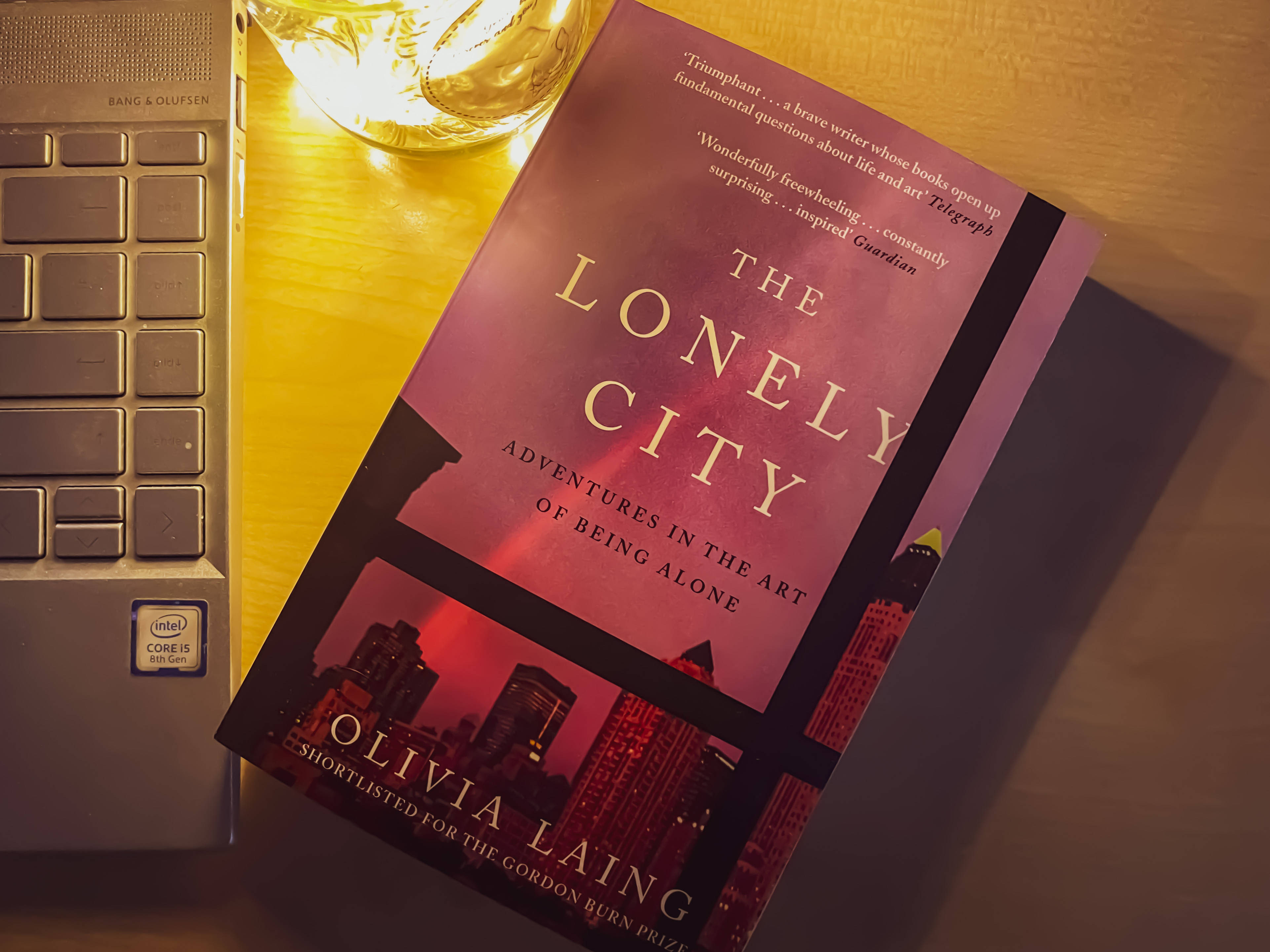
Book By: Olivia Laing
“Sometimes, all you need is permission to feel.”
Olivia Laing’s The Lonely City isn’t a cure for loneliness—it’s a quiet companion to it. Part memoir, part cultural meditation, the book explores what it means to be alone in a crowd, tracing Laing’s own isolation in New York alongside the lives of artists like Hopper, Warhol, and Wojnarowicz, who each wrestled with solitude in their work.
Loneliness, Laing writes, feels “like being hungry when everyone around you is readying for a feast.” It’s more than a lack of company—it’s a lack of belonging, of being seen, of being touched. The book is filled with moments that pierce: the man whose room was discovered, after his death, to be crammed with unseen paintings; the person who likened hell not to fire but to ice—frozen in isolation.
Reading The Lonely City was not always easy. Some passages made me pause, shaken—lines about invisibility, speechlessness, the yearning for closeness that intimacy can’t quite satisfy. But there is a strange comfort in how Laing doesn’t try to resolve this feeling. Instead, she names it. She offers the idea that our loneliness isn’t always personal—it’s shaped by the world, by systems that exclude, stigmatize, and silence.
Art, she argues, can’t save us. But it can witness us. It can reach across silence and say, “You’re not the only one.”
I picked up this book expecting insight and found resonance instead. Reading it during a time when I, too, felt somewhat apart from the world, I found myself underlining passages like lifelines. Laing didn’t offer me answers, but she gave me language. And sometimes, that’s enough.
